India is a land of incredible linguistic diversity, where every few hundred kilometers, the rhythm and vocabulary of the spoken tongue change beautifully. Among the most vibrant and culturally rich languages of North India are those spoken in the desert lands of Rajasthan and the fertile plains of Haryana. For an outsider, they might sound similar, but a deeper look into Marwadi vs Haryanvi reveals two distinct worlds of history, emotion, and phonetic structures. Whether you are a linguist, a content creator, or someone proud of your heritage, understanding these dialects is essential in today’s digital age.
In 2026, the digital presence of regional languages is exploding. People no longer want to communicate only in formal Hindi or English; they want to express themselves in the raw, honest dialects of their ancestors. This brings us to the core of the Marwadi vs Haryanvi debate. While both are often categorized under the larger umbrella of Hindi in official records, they possess unique identities that define the people of Rajasthan and Haryana. In this comprehensive guide, we will explore their differences and show you exactly how to type these dialects online to connect with your community.
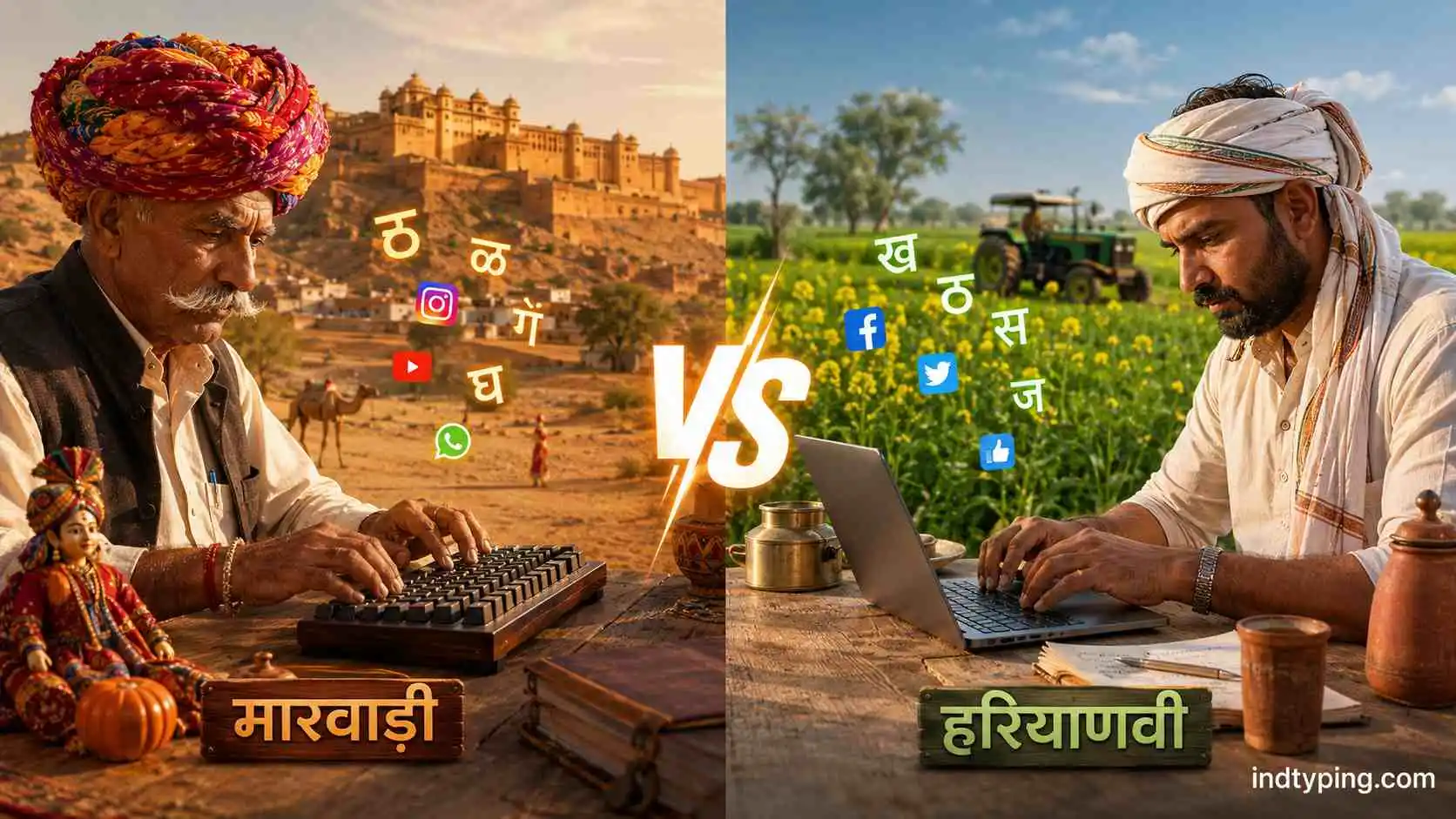
Fig: A linguistic journey through the hearts of Rajasthan and Haryana.
1. The Cultural Essence of Marwadi (Marwari)
Marwadi, primarily spoken in the Marwar region of Rajasthan, is known for its sweetness and politeness, even when the conversation is intense. It is a language of trade, poetry, and folk songs. Historically, Marwadi was written in the Mahajani script, but modern users have shifted to the standard Devanagari script for ease of communication.
When comparing Marwadi vs Haryanvi, one of the first things you notice is the “pitch.” Marwadi tends to be more melodic and rhythmic. It carries the weight of Rajputana history and the hospitality of the desert. Words like “Khamma Ghani” (a respectful greeting) showcase the deep-rooted respect embedded in the dialect. For a blogger or social media influencer, using Marwadi text adds a touch of royal authenticity to their content.
2. The Bold Spirit of Haryanvi
On the other side of the border lies Haryana, where the dialect is as sturdy and straightforward as its people. Haryanvi is often perceived as “blunt” or “rough” by those who don’t understand it, but for native speakers, it is a language of humor, pride, and directness. It is an Indo-Aryan language that shares a strong bond with Braj Bhasha and Bagri.
In the Marwadi vs Haryanvi comparison, Haryanvi stands out for its high-energy delivery. While Marwadi might take a scenic route in a sentence, Haryanvi gets straight to the point. Expressions like “Ke haal se?” (How are you?) or the famous “Dhaakad” (Strong/Formidable) reflect the spirited nature of the Haryanvi people. Today, Haryanvi music and cinema are trending globally, making it more important than ever to have the right tools to type and share Haryanvi content online.
3. Key Linguistic Differences: Marwadi vs Haryanvi
Understanding the technical differences between Marwadi vs Haryanvi helps in creating better localized content. Here are some primary distinctions:
- Grammar and Suffixes: Marwadi often uses suffixes like ‘-ro’ or ‘-ri’ (e.g., ‘Chhoro’ for boy), whereas Haryanvi frequently uses ‘-ka’ or ‘-ke’ (e.g., ‘Chhora’ or ‘Baalak’).
- Tone: Marwadi is generally softer and more aspirated, while Haryanvi is more glottal and explosive in its pronunciation.
- Vocabulary: While both borrow from Sanskrit, Marwadi has a higher influence of Rajasthani folk vocabulary, whereas Haryanvi has a mix of Punjabi and Western Hindi influences.
4. How to Type Marwadi and Haryanvi Online Instantly
The biggest challenge for speakers of these dialects has been the lack of dedicated keyboards. Most people resort to typing in English (Hinglish/Tanglish), which often fails to capture the true pronunciation of regional words. To bridge this gap, using a phonetic transliteration tool is the smartest solution.
Whether you are debating Marwadi vs Haryanvi in a blog post or writing a script for a viral reel, you need a tool that converts your English keystrokes into perfect Devanagari script. This is where IndTyping steps in to make your life easier.
🚀 Type Your Dialect with IndTyping Tools
Since both Marwadi and Haryanvi use the Devanagari script, our English to Hindi Typing Tool is the perfect companion for you. You can type phonetically (e.g., type ‘Ram Ram Sa’ or ‘Ke haal se’) and get the perfect script instantly. Also, don’t forget to check our Tamil Typing or Telugu Typing pages if you are creating multilingual content!
5. Why Digital Creators Love These Dialects
If you look at trending videos on Instagram or YouTube, Marwadi vs Haryanvi content is often at the top. Creators are realizing that their audience feels a much stronger connection when they see captions or subtitles in their own dialect.
Using a Haryanvi typing tool or a Marwadi converter allows you to create high-quality SEO-friendly blog posts that rank for regional queries. In the crowded English and Hindi internet, these dialects offer a “Blue Ocean” where competition is low and user loyalty is incredibly high. For more insights on digital growth, you can explore Wikipedia’s entry on Haryanvi (External Dofollow Link) to understand its academic roots.
Final Thoughts
The comparison of Marwadi vs Haryanvi is not about which dialect is better, but about celebrating the unique flavors of Indian culture. Marwadi brings the elegance of the desert, while Haryanvi brings the raw power of the plains. By utilizing smart typing tools like IndTyping, we can preserve these beautiful dialects in the digital realm. Whether you are writing a heartfelt message or a viral blog post, let your mother tongue lead the way!
Frequently Asked Questions (FAQ)
Is Marwadi and Haryanvi the same?
No, they are different. While both belong to the Indo-Aryan family and use Devanagari script, the Marwadi vs Haryanvi distinction is clear in their tone, grammar, and geographical roots. Marwadi is spoken in Rajasthan, while Haryanvi is native to Haryana and parts of Delhi.
How can I type Haryanvi or Marwadi on my mobile without a keyboard?
The easiest way is to use the IndTyping phonetic tool. You can simply type the sounds in English, and it converts them into the dialect’s script. It is much faster than using a traditional Devanagari keyboard layout.
Which dialect is more popular for music and reels?
Currently, Haryanvi music and reels are seeing a massive surge globally due to their high-energy beats and direct lyrics. However, Marwadi folk and fusion music maintain a very loyal and elite listener base across the world.