India is not just a country; it is a vibrant subcontinent of diverse cultures, traditions, and most importantly, languages. With hundreds of distinct languages and thousands of dialects, the linguistic heritage of India is unparalleled. However, as the world becomes increasingly digitized and globalized, many of these beautiful mother tongues face the silent threat of digital extinction. When we talk about preserving native Indian languages in 2026, we are no longer just talking about printing more books or opening more libraries. The real battle for language survival is currently happening on the internet, and the weapons of choice are smartphones and keyboards.
A language thrives only when its people actively use it in their daily lives—not just for formal ceremonies, but for casual chatting, social media updates, and digital content creation. If a generation finds it too difficult to type in their mother tongue, they will eventually abandon it for English. This is exactly where technology steps in to save the day. In this detailed guide, we will explore the monumental role of online typing tools in preserving native Indian languages and bridging the gap between ancient heritage and modern technology.
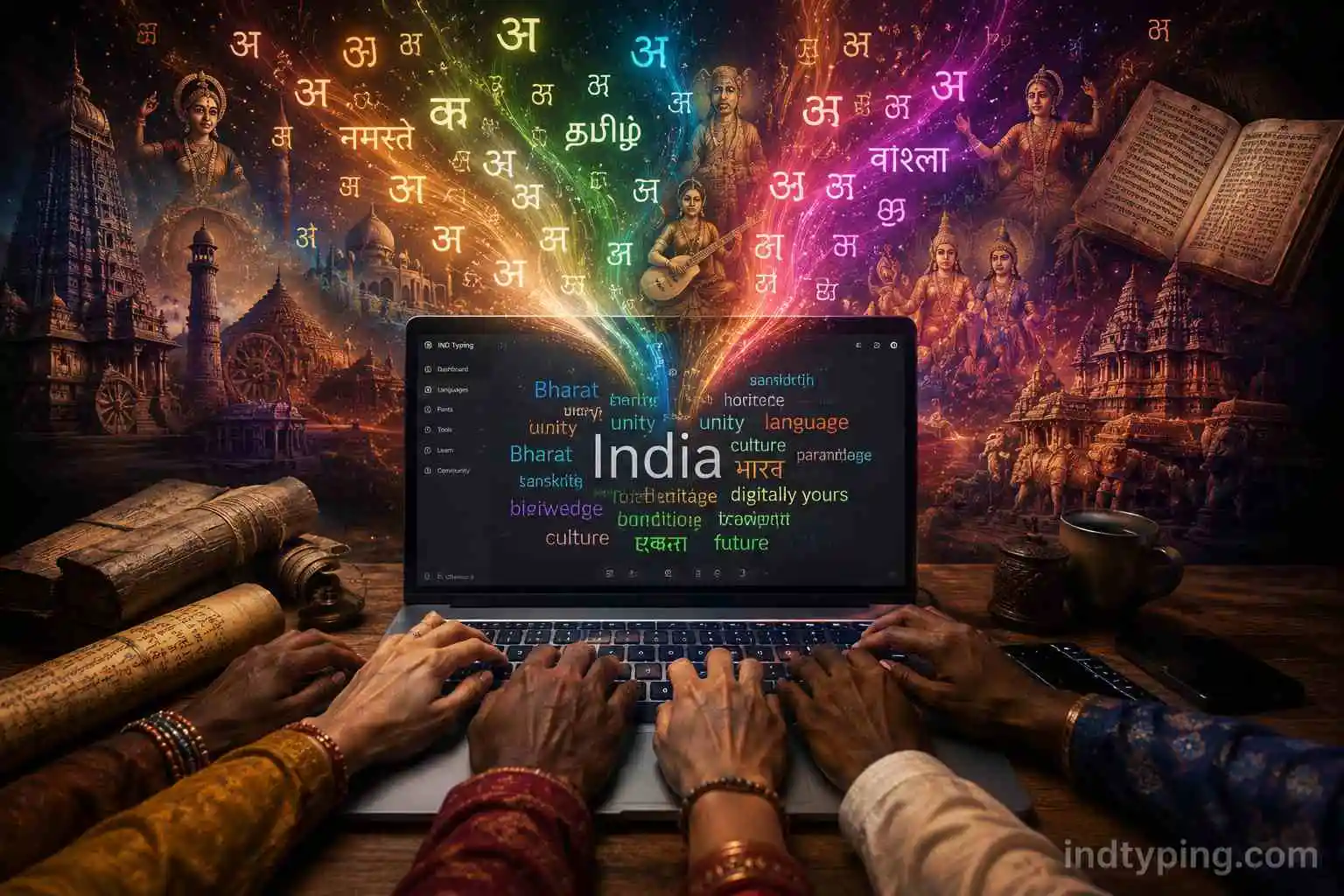
Fig: Empowering local communities through regional language typing tools.
The Digital Threat to Regional Mother Tongues
To understand the solution, we must first analyze the problem. The architecture of the early internet, including computer keyboards and operating systems, was heavily biased toward English. If someone wanted to type in Tamil, Marathi, or Gujarati in the early 2000s, they had to install complex, heavy software and memorize frustrating physical keyboard layouts like Bamini or Kruti Dev.
Because of this high friction, an entire generation of Indian internet users resorted to using “Tanglish” (Tamil + English) or “Hinglish” (Hindi + English). While this solved the immediate communication problem, it slowly eroded the purity of the native scripts. When a language loses its written script in the daily lives of its speakers, it takes the first step toward extinction. Therefore, preserving native Indian languages requires removing this technological friction entirely.
The Revolutionary Role of Online Typing Tools
The introduction of phonetic transliteration was a massive turning point. Phonetic typing allows a user to type a regional word using standard English alphabets as it sounds, and a smart software engine instantly converts it into the beautiful native script. For instance, typing “Namaskaram” instantly yields “நமஸ்காரம்” in Tamil or “నమస్కారం” in Telugu.
This simple technological innovation is the cornerstone of preserving native Indian languages today. Here is exactly how online typing tools are making a massive cultural impact:
1. Effortless Adoption by the Youth (Gen Z and Alpha)
The younger generation prioritizes speed and convenience. They do not have the time to learn complex traditional typing classes. Online tools provide a zero-learning-curve solution. A teenager can use a phonetic tool to write a beautiful regional poem for Instagram or create a localized meme in seconds. By making the native script “cool” and easy to use on social media, we are ensuring that the language remains relevant to the youth.
2. Digitizing Ancient Literature and Folklore
India is home to thousands of ancient manuscripts, folk songs, and regional stories that only exist in physical paper forms or verbal traditions. Historians, bloggers, and enthusiastic grand-parents are now using online typing tools to digitize these treasures. By typing out these historical texts in pure Unicode script, they make them searchable on Google forever. This ensures that a student fifty years from now can easily find and read their ancestral history online.
🌐 Join the Movement with IndTyping
At IndTyping, we are deeply committed to this cultural mission. We have built fast, privacy-focused transliteration tools for you. Start documenting your thoughts using our English to Tamil Typing Tool, share your stories with our Bengali Typing App, or communicate seamlessly across the nation using our Hindi Typing and Marathi Typing interfaces. Your words matter!
3. Boosting Regional E-Commerce and Journalism
The internet is shifting from global to hyper-local. Local news portals, regional journalists, and small-town e-commerce businesses rely heavily on native languages to build trust with their customers. Online transliteration tools allow a small business owner in a tier-3 city to quickly draft a promotional WhatsApp message in pure Odia, Gujarati, or Punjabi. When commerce and journalism thrive in a local language, the economic value of the language increases, which is a vital factor in preserving native Indian languages.
The Importance of Unicode Standardization
Before modern online tools existed, people used custom fonts. If you typed a document and sent it to a friend who didn’t have that specific font installed, they would just see a bunch of messy square boxes.
Modern transliteration tools utilize strict Unicode standards. When you type using a platform like IndTyping, the output is universally recognized by Facebook, Google, Microsoft Word, and Android smartphones. This standardization has universally democratized regional languages. For a deeper look into how languages are structured and classified, you can read more about the Languages of India on Wikipedia (External Dofollow Link), which highlights the vastness of our linguistic wealth.
Final Thoughts: A Collective Responsibility
A language dies when its speakers stop creating new memories with it. While government policies and educational institutions play a role, the true power of preserving native Indian languages lies in the hands of everyday internet users. Every time you choose to send a festive greeting in your native script instead of English, every time you write a regional blog post, and every time you caption your photo in your mother tongue, you are contributing to the survival of your culture.
Online typing tools are not just utility software; they are digital bridges connecting our rich past to a technologically advanced future. Let us embrace these phonetic tools, type with pride, and ensure that our diverse mother tongues continue to echo beautifully across the digital universe for centuries to come.
Frequently Asked Questions (FAQ)
How do online keyboards help in preserving native Indian languages?
Online keyboards and transliteration tools remove the technical difficulty of typing regional scripts. By allowing users to type phonetically using standard English keys, these tools encourage the younger generation to actively chat, blog, and create digital content in their mother tongue, thereby keeping the language alive and active online.
What is the best online typing tool for Indian regional languages?
Platforms like IndTyping are highly recommended because they offer a 100% free, cloud-based phonetic transliteration engine. They support multiple major Indian languages, require zero installation, and output universally accepted Unicode text that works seamlessly on all social media platforms.
Can digital transliteration save dying dialects in India?
Yes! Digital transliteration plays a massive role in preserving native Indian languages and rare dialects. It allows linguists, historians, and local communities to easily digitize folk songs, historical texts, and oral traditions into text format, ensuring they are permanently archived and searchable on search engines like Google.